Thursday, December 2, 2010

MAC Address Changer for Windows XP/2003


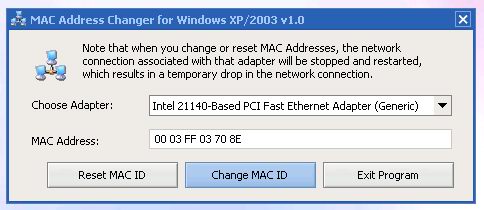
Fig. 1 : Screenshot of the one and only main dialog

Fig. 2 : You can use getmac from a command prompt to list MAC Addresses of your n/w adapters

Overview

My cable ISP does something really unusual and annoying: it locks a cable modem to the N/W card's MAC address, thereby disallowing a user from either changing his network card or using a different machine. When my dad visits me, this is most inconvenient as he cannot plug his laptop into the internet and I don't have a LAN at home he can plug into. A Linuxian friend of mine suggested that I change the MAC ID, which is apparently a one-command operation on Linux-based machines.
I Googled around and found that changing the MAC under Windows involved changing certain registry values and resetting the network adapter. I barely trust my dad with his laptop, so you can imagine how I felt about trusting him to modify the registry and reset network adapters. I am not particularly crazy about coding; I do it for a living as well as an off-work hobby, but I thought it'd be a prudent idea to write a GUI application for my dad in my spare time. That's how MAC Address Changer for Windows XP/2003 came into being.

Requirements

  • Windows XP / Windows 2003

Operations

Change the MAC ID

Enter a MAC Address into the edit box and click the Change button. It validates the ID you've entered, so you cannot enter a MAC like "I am a chicken hawk" or something goofy like that.

Reset the MAC ID

This'll reset the MAC address to the adapter default.

Things to Note

  • Normally, both operations would be pretty straightforward. Sometimes though, with some network adapters, programmatic reset of the adapters will fail. In that case, you'll get a message box telling you that you'll need to manually reset the adapter.
  • If you don't have write-access to the HKLM registry key hierarchy, both operations fail.

Program Usage

The program can be used freely for commercial and non-commercial purposes.

Source Code

The source code (decently commented, I hope) has been included. I used VC++ 2005 Beta 2 (MFC dialog application without the /clr option), so you'll need that to open the project files. All the textual UI is taken from the resource, so it should be pretty easy to have versions for other languages, say German or French for instance. If anyone modifies the source code, I request that my original copyright comment headers be left intact.

Pseudo-Statutory Warning

This program may not work with some network adapters and it might cause an adapter to stop working normally if MAC IDs are incessantly changed/reset. Some network administrators might have forbidden the practice of changing MAC addresses, so you might want to check with your sys-admin before you use this program.

Conclusion

This application was written out of personal necessity and if it is useful to other people, well and good. If not, oh well, then nothing is lost anyway. The source code has been provided for interested people.

History

  • May 19, 2005: Began work on program
  • May 25, 2005: Made fixes to allow program to run on Windows 2003
  • May 27, 2005: Program (with source code) first published on The Code Project

License

This article, along with any associated source code and files, is licensed under The Common Development and Distribution License (CDDL)

Hacking Exposed Cisco Networks: Cisco Security Secrets & Solutions

http://covers.mhedu.com/Jpeg_140-wide/0072259175.jpeg
Product Description
Here is the first book to focus solely on Cisco network hacking, security auditing, and defense issues. Using the proven Hacking Exposed methodology, this book shows you how to locate and patch system vulnerabilities by looking at your Cisco network through the eyes of a hacker. The book covers device-specific and network-centered attacks and defenses and offers real-world case studies.

From the Back Cover
Implement bulletproof Cisco security the battle-tested Hacking Exposed way
Defend against the sneakiest attacks by looking at your Cisco network and devices through the eyes of the intruder. Hacking Exposed Cisco Networks shows you, step-by-step, how hackers target exposed systems, gain access, and pilfer compromised networks. All device-specific and network-centered security issues are covered alongside real-world examples, in-depth case studies, and detailed countermeasures. It’s all here--from switch, router, firewall, wireless, and VPN vulnerabilities to Layer 2 man-in-the-middle, VLAN jumping, BGP, DoS, and DDoS attacks. You’ll prevent tomorrow’s catastrophe by learning how new flaws in Cisco-centered networks are discovered and abused by cyber-criminals. Plus, you’ll get undocumented Cisco commands, security evaluation templates, and vital security tools from hackingexposedcisco.com.
  • Use the tried-and-true Hacking Exposed methodology to find, exploit, and plug security holes in Cisco devices and networks
  • Locate vulnerable Cisco networks using Google and BGP queries, wardialing, fuzzing, host fingerprinting, and portscanning
  • Abuse Cisco failover protocols, punch holes in firewalls, and break into VPN tunnels
  • Use blackbox testing to uncover data input validation errors, hidden backdoors, HTTP, and SNMP vulnerabilities
  • Gain network access using password and SNMP community guessing, Telnet session hijacking, and searching for open TFTP servers
  • Find out how IOS exploits are written and if a Cisco router can be used as an attack platform
  • Block determined DoS and DDoS attacks using Cisco proprietary safeguards, CAR, and NBAR
  • Prevent secret keys cracking, sneaky data link attacks, routing protocol exploits, and malicious physical access
Download:
http://www.mediafire.com/?iqymmkj22gm

Hacking Exposed Wireless: Wireless Security Secrets & Solutions

http://ecx.images-amazon.com/images/I/51HQR0tsu2L.jpg
Product Description
Secure Your Wireless Networks the Hacking Exposed Way
Defend against the latest pervasive and devastating wireless attacks using the tactical security information contained in this comprehensive volume. Hacking Exposed Wireless reveals how hackers zero in on susceptible networks and peripherals, gain access, and execute debilitating attacks. Find out how to plug security holes in Wi-Fi/802.11 and Bluetooth systems and devices. You'll also learn how to launch wireless exploits from Metasploit, employ bulletproof authentication and encryption, and sidestep insecure wireless hotspots. The book includes vital details on new, previously unpublished attacks alongside real-world countermeasures.
  • Understand the concepts behind RF electronics, Wi-Fi/802.11, and Bluetooth
  • Find out how hackers use NetStumbler, WiSPY, Kismet, KisMAC, and AiroPeek to target vulnerable wireless networks
  • Defend against WEP key brute-force, aircrack, and traffic injection hacks
  • Crack WEP at new speeds using Field Programmable Gate Arrays or your spare PS3 CPU cycles
  • Prevent rogue AP and certificate authentication attacks
  • Perform packet injection from Linux
  • Launch DoS attacks using device driver-independent tools
  • Exploit wireless device drivers using the Metasploit 3.0 Framework
  • Identify and avoid malicious hotspots
  • Deploy WPA/802.11i authentication and encryption using PEAP, FreeRADIUS, and WPA pre-shared keys

by Johnny CacheandVincent Liu
McGraw-Hill/Osborne 2007 (416 pages)
ISBN:9780072262582
Download:
http://www.ziddu.com/download/4709332/Hacking_Exposed_Wireless_Mar_2007.rar.html

Cisco ASA 5500 Series and ASDM

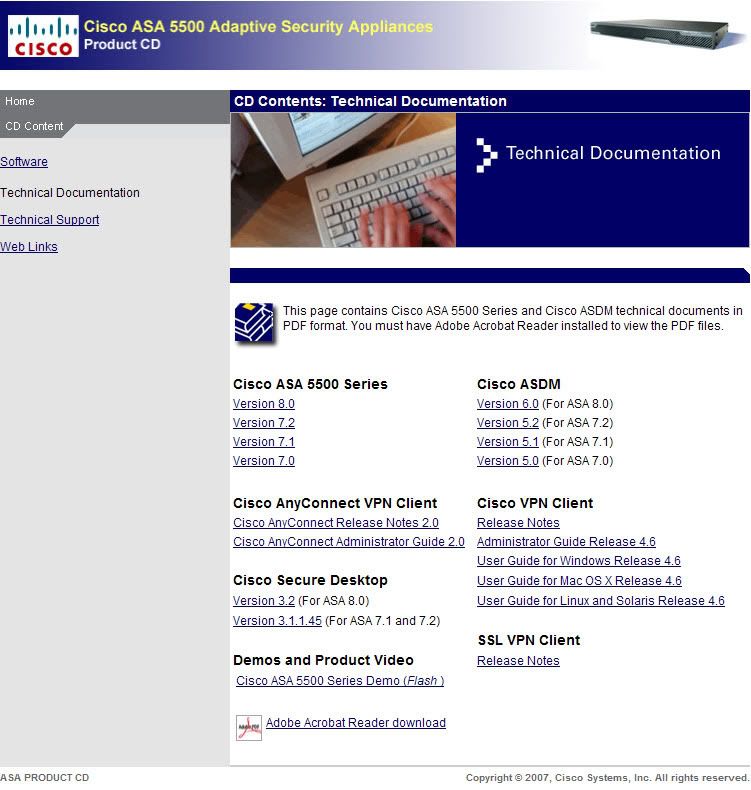
Cisco ASA 5500 Series Adaptive Security Appliance AND Cisco Adaptive Security Device Manager (ASDM) PRODUCT CD
(ASA PRODUCT CD Rev.8)

STARTING THE CD
---------------
Windows Platforms
If your CD does not auto-launch, do the following:
1) View the CD files.
2) Click on cdhome.html to start the CD.

If clicking on cdhome.html does not launch your web browser, then do the following:
1) Open your web browser.
2) Go to File > Open.
3) Select the cdhome.html file.
4) Click OK.

UNIX Platforms
1) Mount the CD to your UNIX system.
2) View the CD files.
3) Copy the file needed to your system.

The software bin files are located under /software.

The technical documentation is located under /docs.

INSTALLING CISCO ASA 5500 ADAPTIVE SECURITY APPLIANCE SOFTWARE
------------------------------------------------
Instructions for installing your Cisco ASA 5500 Adaptive Security Appliance software are available as follows:

On the CD at

* \docs\asa\asa_80\asa-5500-gsg.pdf
* \docs\asa\asa_80\asa-5505-gsg.pdf

Download:
http://rapidshare.com/files/194496856/CiA5500_rev8.part1.rar
http://rapidshare.com/files/194656181/CiA5500_rev8.part2.rar
http://rapidshare.com/files/194667413/CiA5500_rev8.part3.rar
http://rapidshare.com/files/194669328/CiA5500_rev8.part4.rar